
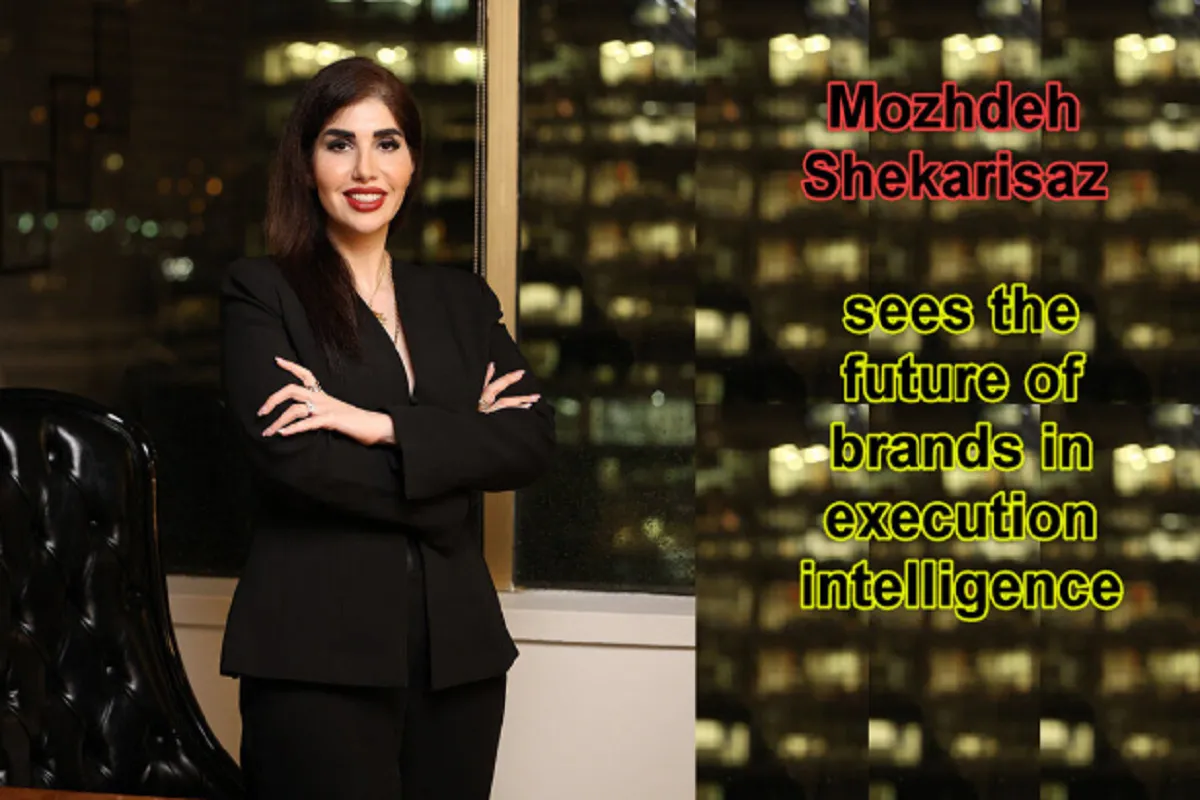
In a market where many businesses compete for attention, Mozhdeh Shekarisaz shifts the focus to something else: structure. She believes a brand designed merely to be seen will weaken when market waves shift. A brand built on systems, however, continues to grow — even in silence.
Her perspective on brand development is not promotional; it is architectural. She builds the pillars before designing the façade. She defines processes before amplifying messages. This sequence distinguishes temporary growth from sustainable expansion.
Mozhdeh Shekarisaz views a brand as an operational asset that must withstand competitive pressure, market change, and economic fluctuation. If decision-making structures are unclear, if responsibilities are undefined, and if standards are undocumented, no marketing strategy can compensate for internal weakness.
Growth Architecture: From Model to Scale
She begins expansion with model design. A model must be simple, explainable, and replicable. If a manager cannot clearly describe the revenue structure and value-delivery process in a few sentences, the model has not yet matured.
In her framework, three principles guide movement:
- Cohesion over excitement
- Process over personality
- Positioning over momentary sales
Cohesion ensures a unified customer experience across all touchpoints. Process guarantees that quality does not depend on individuals. Long-term positioning allows a brand to avoid price-based competition and instead build perceived value.
She argues that many brands erode during growth because they move to the second layer before stabilizing the first. Growth without stabilization consumes capital. Layered growth strengthens it. Each phase must be profitable, controllable, and measurable before expansion begins.
This mindset ensures decisions are data-driven rather than emotional. Performance indicators are defined. Processes are documented. Training becomes standardized. The result is a repeatable model.
Brands in 2026: Operational Excellence Over Noise
Mozhdeh Shekarisaz sees the future of brands in execution intelligence. By 2026, markets will be more saturated and audiences more selective. In such an environment, strong messaging alone will not suffice; consistent experience will determine success.
She identifies three defining characteristics of sustainable future brands: Structural simplicity, operational clarity, and execution flexibility.
Structural simplicity means eliminating unnecessary complexity. Every added layer of complexity generates cost and error. A brand must be able to teach its model and execute it independently of any single individual.
Operational clarity means clearly defining roles, authority, and evaluation metrics. When responsibilities are transparent, decision-making accelerates and conflict declines. This transparency reduces hidden organizational costs.
Execution flexibility does not mean changing principles. Core values remain stable, while methods adapt to conditions. Brands lacking flexibility suffer under market change. Brands without principles lose identity. The balance between the two creates competitive advantage.
Infrastructure: The Line Between Business and Brand
From Mozhdeh Shekarisaz’s perspective, ideas are the starting point, but infrastructure determines survival. Many have ideas; few have systems. A system means defined processes, executable standards, and continuous quality control.
She designs brands with transferability in mind. If a model succeeds only in the founder’s presence, it is incomplete. A true brand emerges when it can be implemented in different markets with consistent quality. This logic forms the foundation of scalable growth and sustainable development.
Her professional message is clear and direct:
- Build structure before expansion.
- Design processes before promotion.
- Create control before scale.
Mozhdeh Shekarisaz transforms brands from short-term projects into strategic assets. Her focus remains on internal architecture rather than external display. The outcome is a brand capable of withstanding market pressure, expanding steadily, and securing its position.
That is the boundary separating an ordinary business from a lasting brand.