
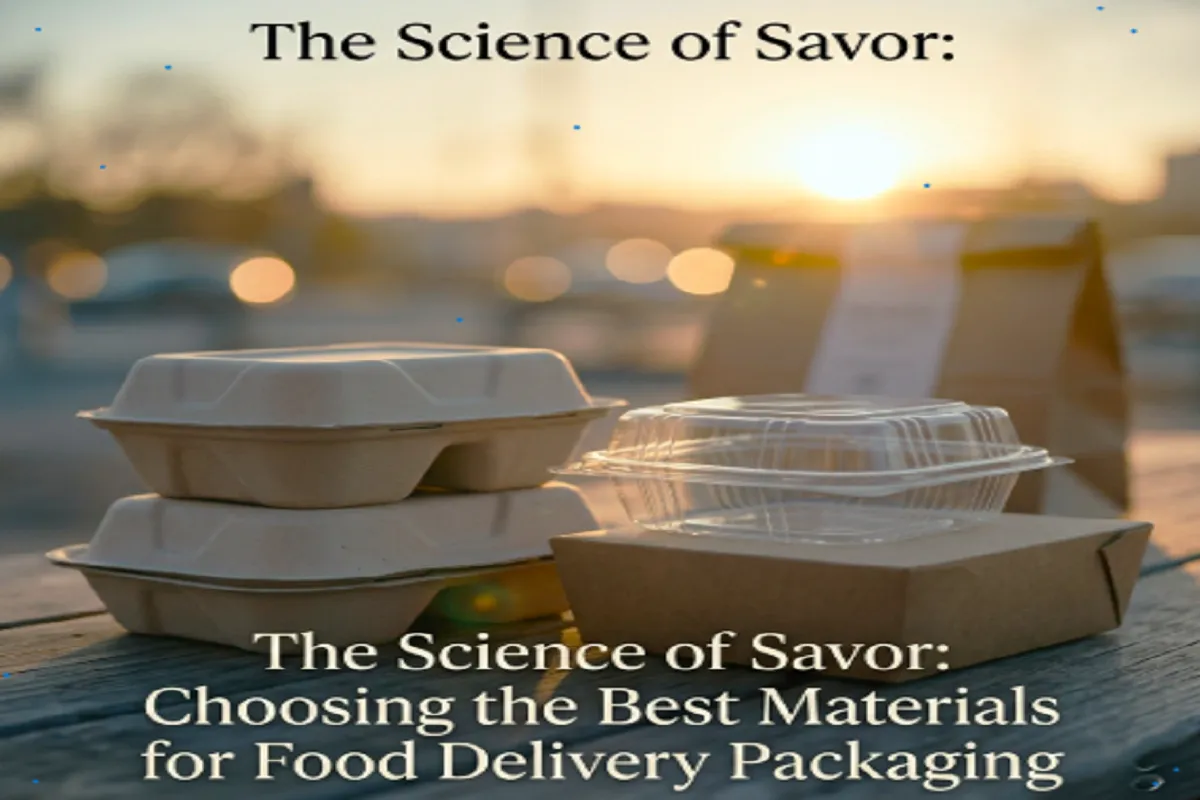
The food delivery environment has been transformed seismically. It used to be the preserve of the occasional Saturday night pizza, but is now a global multi-billion dollar ecosystem that determines the daily meals of millions of people. By 2026, the industry is not only concerned with how fast a courier is anymore; it is evaluated more by the vessel transporting the meal. Since the emergence of so-called ghost kitchens to the development of high-end fine dining delivery, the packaging material has become a sensitive touchpoint of both food safety and quality as well as environmental ethics.
While plastic, aluminum, and various bioplastics remain in the rotation, fiber-based solutions—specifically paper and cardboard—have emerged as the undisputed leaders of the pack. Modern food delivery packaging boxes are no longer the flimsy containers of the past; they are engineered marvels designed to balance the complex physics of heat, moisture, and sustainability.
1. The Material Landscape Beyond the Cardboard Box
To understand why paper and cardboard are preferred, we must first look at the broader spectrum of materials used in the delivery industry today.
-
Plastic and Polymers
Plastic was the default decades ago. It is easily portable, light, and waterproof. Its reputation has however gone down. Plastic has functional shortcomings in addition to the apparent environmental cost of plastics, which is becoming the most significant issue in 2026 with microplastics. It is non-porous, which means that it retains steam. This makes it a greenhouse effect in the container and within minutes, crispy textures become wet. Moreover, the issues of chemical leakages under high-temperature conditions (PFAS, phthalates, etc.) have also caused increased regulatory attention.
-
Aluminum and Foil
Aluminum is also a great insulator and can be recycled. It is the material favorite when it comes to foods that should remain piping hot such as lasagna or curry. But it is power consuming to make and not very transparent so that customers are usually required to open up the container to view what is inside which takes away valuable heat. It does not also play well with microwaves- a major disadvantage of leftovers.
-
Bioplastics (PLA and PHA)
Corn-starch or sugarcane bioplastics were also touted as the plastic killer once. They have a smaller carbon footprint in the production process, but in the process of the actual application, it has been difficult. They need an industrial composting plant to decompose most of them; in a typical landfill they act very much like traditional plastic. Furthermore, they are not as heat-resistant and in certain cases, they even bend when exposed to hot boiling soup.
2. The Science of the “Soggy Factor” Why Fiber Wins
Breathability is the main factor why restaurants are moving to paper and cardboard. Moisture is the bane of texture in the food science world. When a hot food such as fried chicken or a toasted sandwich is put in a tight plastic container, the steam that escapes off the food touches the cold lid, condenses into drops of water and falls back into the food.
Cardboard is porous in nature. It lets a slow flow of steam escape and the thick corrugated layers can give enough insulation to maintain the temperature of the core. This property of breathable insulation of fiber-based materials cannot be easily made synthetically unless venting systems are complex (and expensive).
3. Structural Integrity and Protection
A giving birth process is seldom easy. The food packages are loaded into thermal bags, shaken in the back of motorbikes, and pushed up staircases. Cardboard also offers structural “scaffolding” which plastic clamshells frequently do not offer.
- Corrugation: The fluted layer between two sheets of paperboard acts as a shock absorber. This prevents the box from collapsing when stacked, ensuring the top of the pizza box doesn’t touch the cheese.
- Aqueous Coatings: By 2026, the industry has largely moved away from plastic-film linings. Modern cardboard boxes use aqueous (water-based) coatings that provide a grease barrier without hindering the recyclability of the paper. This allows a box to hold a greasy burger without the bottom falling out.
4. The Sustainability Mandate: A Circular Economy
Consumer preference and legislation are the driving forces behind the move towards paper. In 2026, several large cities have passed Zero Waste laws that will impose fines on companies that use materials that cannot be recycled.
-
High Recycling Rates
Cardboard is the most recycled packaging material in the world. Paper fibers can be used over five or seven times, compared to plastic which is of low quality whenever processed; therefore, it is nearly impossible to use plastic in other times. Although a cardboard box may not be recycled, it is biodegradable. A simple paper box will degenerate in a backyard compost heap in a few months, but a plastic container will last hundreds of years.
-
Renewable Sourcing
The majority of food packaging in the modern world is now made of FSC certified (Forest Stewardship Council) forests. This makes sure that every tree cut to produce a burger box is replaced by more, which will be a renewable cycle that, by comparison, differs with the fossil-based production of traditional plastics.
5. Branding and the “Unboxing” Experience
In the age of social media, the “unboxing” experience is a vital part of a restaurant’s marketing strategy. Delivery is often the only physical interaction a customer has with a brand.
Paper and cardboard offer a superior canvas for branding.
- Print Quality: Unlike plastic, which requires specialized treatments to hold ink, paper is naturally receptive to high-definition printing.
- Tactile Appeal: There is a psychological “premium” feel to heavy-duty matte cardboard compared to the “cheap” feel of thin plastic or Styrofoam.
- Communication: Brands can print QR codes, menus, and sustainability stories directly on the box, turning the packaging into an interactive experience.
6. Logistics: The Hidden Cost-Efficiency
From a restaurant’s operational perspective, cardboard is often more cost-effective when considering the entire supply chain.
- Space Saving: Cardboard boxes are shipped and stored flat. A stack of 500 flat pizza boxes takes up a fraction of the space required for 500 pre-formed plastic containers. This reduces storage costs and allows smaller kitchens to maintain a larger inventory of packaging.
- Customization: Because die-cutting paper is relatively inexpensive, restaurants can order custom-sized boxes that fit their specific portions perfectly. This eliminates “dead space” in the box, which helps keep the food from sliding around and maintains heat more effectively.
7. Safety and Consumer Health
By 2026, the debate on the topic of the Food Contact Chemicals is more than ever. It has always been found that certain plastics are capable of leaching endocrine-disrupting chemicals when in contact with fatty or acidic food at high temperatures.
Cardboard, especially when composed of virgin pulp and the use of natural grease-proofing agents, is usually thought to be safer in high-heat applications. It doesn’t melt, it doesn’t “smell like chemicals” when opened, and it provides a neutral environment that doesn’t interfere with the flavor profile of the meal.
Comparative Analysis of Food Packaging Materials
| Feature | Paper & Cardboard | Traditional Plastic | Aluminum Foil | Bioplastics (PLA) |
| Texture Retention | Superior (Breathable; prevents sogginess) | Poor (Traps steam; leads to moisture) | Moderate (Retains heat but traps steam) | Low (Non-porous; tends to sweat) |
| Insulation Property | High (Corrugated layers act as buffers) | Low (Thin walls lose heat quickly) | Excellent (Reflects thermal energy) | Moderate (Thin construction) |
| Environmental Impact | Very Low (Biodegradable & Recyclable) | Very High (Non-biodegradable; microplastics) | Moderate (Recyclable but energy-intensive) | Moderate (Requires industrial composting) |
| Microwave Safety | Yes (Safe for reheating) | Conditional (Risk of chemical leaching) | No (Fire hazard) | No (Often melts at low heat) |
| Storage Efficiency | High (Stored flat; saves 80% space) | Low (Nested but bulky) | Moderate (Bulky rolls or pre-formed) | Low (Rigid shapes) |
| Branding Potential | Excellent (High-res printing; matte finish) | Moderate (Labels or basic printing) | Poor (Hard to print on directly) | Moderate (Translucent; limited ink grip) |
| Chemical Safety | High (Natural fibers; aqueous coatings) | Low (Potential for BPA/Phthalate leaching) | High (Inert material) | Moderate (Processed |
In conclusion, The Future is Fiber.
The ideal delivery container has to have four masters namely: the chef (who desires the food to be delicious), the courier (he desires the food to be easy to carry), the consumer (he desires the food to be convenient and safe), and the planet (who cannot handle more wastes).
Although there is no material that lacks its disadvantages, paper production is very intensive in water, e.g. the modern trend of material science is strongly biased towards fiber. The simple cardboard box is a developing thing with the development of molded pulp (which may be shaped as plastic but recycled as paper) and seaweed-coatings. It is still the most fair, functional and morally right decision in a world that will not cease to order in.